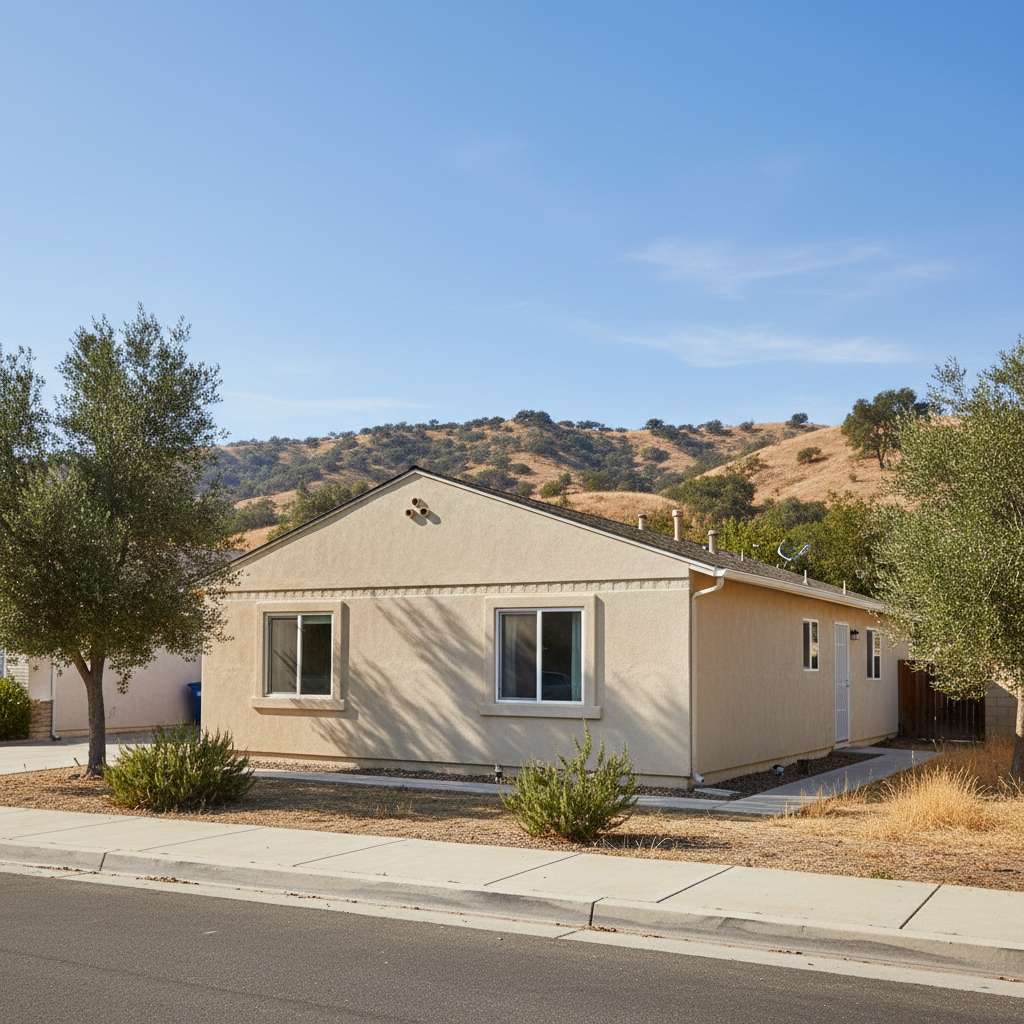
Alright, let's talk about EIFS—that's Exterior Insulation and Finish Systems, sometimes called synthetic stucco. If you're thinking about putting it on your Santa Clarita home, you're probably wondering what it'll actually set you back. Forget those vague guesses; I'm here to give you the real deal on pricing, what makes it go up or down, and how to make sure you're getting good value for your money.
What Really Drives EIFS Installation Costs?
You know how everyone says "it depends" about everything? Well, with EIFS, it truly does hinge on a few key things. Think about building a house, for example—the final price isn't just about the square footage, right? It's all those little details, the materials you pick, and, crucially, who's actually doing the work.
- How Big and Complicated Your Home Is: This is probably the biggest piece of the puzzle. A simple, flat wall is much quicker and easier to cover than a house with lots of gables, dormers, arches, or intricate architectural bits. More corners, curves, and cut-outs mean more labor and a need for super precise work. A typical home might need between 1,500 and 2,500 square feet of cladding, just to give you an idea.
- Material Quality and Type: EIFS isn't just one single product; there are different systems and qualities out there. You've got your insulation board (expanded polystyrene, or EPS, is pretty common), the base coat, reinforcing mesh, and then the finish coat. Better quality materials can last longer and insulate better, but they'll cost more initially. Oh, and the insulation board's thickness can vary too, which also affects the price.
- Labor Rates & Expertise: This is a huge factor. Putting in EIFS is a specialized skill, no doubt about it. It's a multi-layered system that has to be installed just right to avoid problems like moisture getting in. You'll generally find EIFS labor costs running from $5 to $9 per square foot. A certified, experienced crew might charge a bit more, but that expertise is definitely worth it to prevent expensive issues later on.
- How Easy It Is to Access the Site: Is your home easy to get to? Do we need a lot of scaffolding, or can we just use ladders? If we need special equipment like lifts for higher sections or awkward angles, that's going to add to the cost.
- Prepping the Walls: Sometimes, we're putting EIFS on a brand new build. Other times, we're replacing old siding. If there's old siding to take off, or if the existing walls need fixing—like rotted sheathing or uneven spots—that's extra work and cost. Finding underlying water damage or mold can really push the overall price up.
- Finish Texture and Color: EIFS gives you a ton of design options. Different textures (like fine sand or a medium float) and custom colors can impact both material costs and the labor involved.
- Permits and Cleanup: Don't forget these, folks. Permits are usually a must, and proper waste disposal and cleaning up the site are just part of doing a professional job.
Typical EIFS Costs in Santa Clarita
So, what kind of money are we actually talking about? For residential EIFS installation, you're generally looking at a range of $8 to $14 per square foot, all installed. Some sources even say the average is closer to $11 per square foot.
Let's break that down for a typical Santa Clarita home:
- For a smaller job, maybe 500 square feet (like an accent wall or a small addition), you might see costs between $4,000 and $7,000.
- For an average-sized home, around 2,000 square feet, expect to pay anywhere from $16,000 to $28,000.
- Larger homes, or those with more complex designs, hitting 2,500 to 3,000 square feet, could range from $20,000 to $42,000.
Just remember, these are general ranges. If your home is in, say, Valencia, with a lot of intricate architectural details, or if we find significant dry rot when we remove old siding, your costs could definitely land on the higher end.
What Your Quote Should Include
A good quote isn't just one number; it's a detailed breakdown, right? When Santa Clarita Stucco & Plastering gives you a quote, here's what we make sure to cover:
- A Detailed Plan of Work: This should clearly lay out every step, from getting the surface ready to that final finish coat. It should also specify the exact type of EIFS system we're putting in (like drainage EIFS, which is super important for managing moisture in our climate).
- Materials Breakdown: What kind of insulation board are we using (EPS, XPS, mineral wool) and how thick is it? What type of reinforcing mesh (standard or impact-rated)? What kind of base coat and finish coat?
- Labor Costs: This covers the crew's time for installation, setting everything up, and cleaning up afterward.
- Access & Equipment: Any costs tied to scaffolding, lifts, or other specialized gear needed for the job.
- Permits: We take care of pulling all the necessary permits for the work.
- Waste Removal: Getting rid of old materials and construction debris properly.
- Warranty Information: All the details on the warranty for both the materials and our workmanship.
If a quote just gives you a single lump sum, push for more detail. You really want to see those line items so you know exactly what you're paying for.
How to Avoid Paying Too Much for EIFS Installation
Nobody wants to feel ripped off. Here's what I tell people to do to make sure they're getting a fair price for quality EIFS work:
- Get Several Detailed Quotes: Don't just get one. Get at least three quotes from contractors with good reputations. Make sure each quote is for the exact same amount of work and materials so you can compare apples to apples.
- Ask for References and Actually Check Them: A good contractor will have plenty of happy customers. Give them a call, ask about their experience, and if you can, go take a look at the work they did.
- Verify Licenses and Insurance: Always, always, always make sure your contractor is licensed and insured. This protects you if anything goes wrong.
- Understand the EIFS System: A modern EIFS system should include a water-resistive barrier and a drainage plane. This is absolutely critical for preventing moisture problems, especially with our occasional heavy rains here in Santa Clarita. If a contractor isn't talking about drainage, that's a big red flag.
- Don't Just Go for the Cheapest Bid: The lowest bid often means someone's cutting corners, either on materials or the quality of the labor. EIFS is an investment in your home's energy efficiency and protection. A bad installation can lead to really expensive repairs later on—sometimes costing $30-$50 per square foot to fix. It's just better to pay a fair price for a job done right the first time.
- Ask About the Crew's Experience: EIFS needs certified installers. Ask about the training and experience of the actual crew who will be working on your home.
- Read the Contract Carefully: Before you sign anything, make sure you understand every single detail. What are the payment terms? What's the timeline? What happens if unexpected issues pop up?
Installing EIFS is a big project, but when it's done right, it adds fantastic value, energy efficiency, and curb appeal to your home. Take your time, do your homework—you know, the usual—and you'll end up with a truly great result.